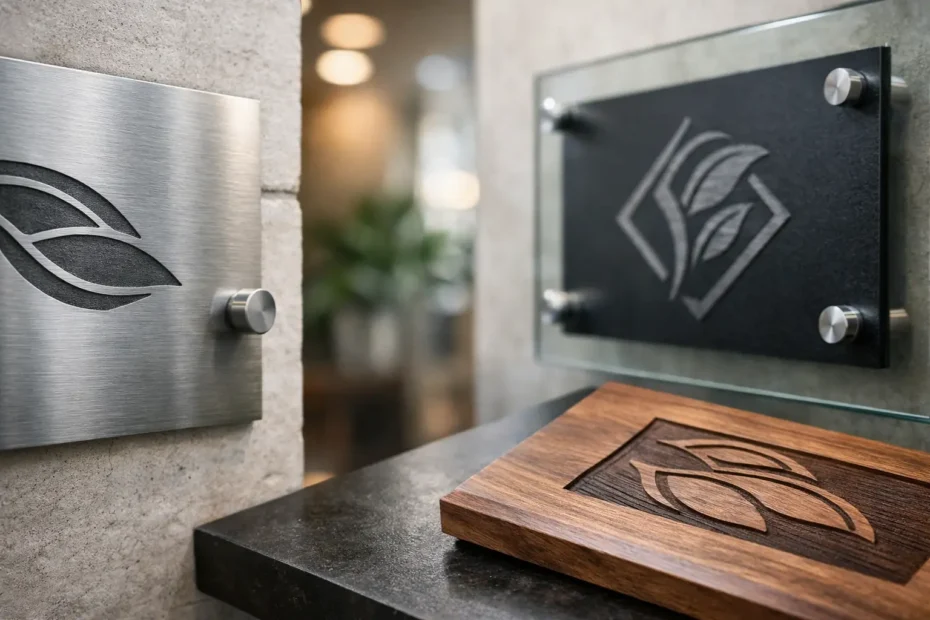
A sign often speaks before anyone has a chance to. The name on a reception desk, the room label outside a meeting space, or the commemorative plaque at a school entrance all set an expectation. Custom engraved signage gives those everyday details a polished, permanent presence while making people feel welcomed, informed, and recognized.
For businesses, schools, sports clubs, and community organizations, signage is not merely directional. It is part of the experience. Clear, well-made signs help visitors find their way, reinforce your identity, and show that the details have been considered. For personal occasions, an engraved sign or plaque can turn a name, date, or message into a lasting memory.
Why Custom Engraved Signage Makes a Difference
Printed paper notices and temporary labels have their place, especially when information changes frequently. But they can fade, peel, or look out of place in a professional setting. Engraved signs are designed for the moments and messages that deserve to stay visible.
The engraving creates a crisp, intentional finish that suits everything from office doors and reception areas to donor boards, memorials, and award displays. A custom design also allows you to match the sign to its surroundings. That might mean a clean brushed-metal look for a corporate office, warm timber for a clubroom, or an elegant plaque for a presentation or remembrance.
The value is both practical and personal. People can quickly identify a room, desk, building, or item. At the same time, the sign carries your logo, colors, language, or message in a way that feels distinctly yours.
Start With the Sign’s Job
The best choice begins with a simple question: what does this sign need to do? A small desk plate has different requirements from an outdoor building sign, and a memorial plaque has a different tone from a safety label.
Wayfinding signs guide people through a space. Think reception signs, office door plaques, restroom labels, parking notices, and room markers. Their priority is readability. The wording should be direct, the type should be easy to read at the expected distance, and the contrast between the text and background should be strong.
Recognition signage has a more ceremonial role. Donor plaques, honor boards, retirement gifts, team displays, and commemorative signs are designed to be read more closely and kept for years. Here, the layout, material, and exact wording matter just as much as the information itself.
Branding and identification signs sit between the two. These can include logo plaques, staff name plates, equipment labels, property tags, and counter signs. They need to look professional while standing up to regular handling or cleaning.
When a sign has more than one job, prioritize the one that matters most. A reception sign can include decorative elements, for example, but the business name should remain immediately clear. A donor board may need a refined layout, but names should still be easy to locate and update where possible.
Choosing Materials for Custom Engraved Signage
Material selection affects the look, lifespan, and cost of a sign. There is no single best option. The right choice depends on where it will be displayed, how often it will be handled, and the impression you want to create.
Metal-look laminates are a popular choice for name plates, office signs, labels, and awards because they offer a smart finish and clear engraved contrast. They are practical for indoor environments and work well when you need multiple signs with a consistent appearance.
Acrylic can create a modern, polished result. It is especially effective for reception areas, branded displays, desk signs, and contemporary interiors. Clear, frosted, black, white, or colored acrylic can be selected to complement your logo or décor. Keep in mind that highly reflective surfaces may need careful placement near bright windows or direct lighting.
Timber brings character and warmth. It suits hospitality spaces, clubrooms, rustic wedding signage, recognition boards, and meaningful gifts. Because timber has natural variation, each piece can have its own personality. That is part of the appeal, though it also means the grain may influence the final look.
For outdoor use, durability should lead the decision. Exposure to sun, rain, salt air, and temperature changes can affect materials differently. Share the intended location before ordering so the sign can be specified with the right material, finish, and fixing method for the conditions.
Details That Make a Sign Easy to Read
An engraved sign does not need a crowded design to make an impact. In fact, the most effective signs are often the simplest. A clear hierarchy helps the eye understand what matters first: the organization name, room name, person’s name, or key instruction.
Choose wording that is concise. “Staff Only” is clearer than a long sentence. “Conference Room” may be more useful than a department abbreviation unfamiliar to visitors. For commemorative pieces, take extra time to confirm names, titles, dates, and spelling before production. These are small details, but they carry great importance when a sign marks someone’s contribution or a significant milestone.
Typography deserves attention, too. Decorative fonts can be appropriate for a wedding, a special gift, or a formal plaque, but they may not work for safety or directional signage. A straightforward font, generous spacing, and strong contrast make a sign more accessible for everyone.
Logos and icons can add instant recognition, particularly on workplace and school signage. They should be supplied in a clear, high-quality format where possible. If the logo includes fine lines or small text, simplifying it may produce a cleaner engraved result at smaller sizes.
Plan for Placement and Fixing
A well-designed sign can still be missed if it is installed in the wrong place. Before finalizing the size, consider how far away people will stand and whether they will approach from the left, right, or directly ahead. Door signs generally need to be visible before a visitor reaches the doorway, while desk plates are read at close range.
Fixing options are part of the design, not an afterthought. Adhesive backing can suit smooth indoor surfaces and smaller labels. Screw holes provide a more permanent option for walls, gates, and larger plaques. Stand-off fixings can give acrylic and metal signs a raised, premium look. Some signs may need a frame, a backing board, or a removable format for changing names and information.
If you are ordering a set of signs for a new office, school block, or event venue, consistency matters. Establish the same sizes, fonts, colors, and placement rules across the set. It makes the space easier to navigate and presents a more organized image from the first day.
Ordering for One Sign or a Full Rollout
A one-off engraved plaque and a multi-site signage project both benefit from clear information at the start. Provide the final wording, preferred size, material idea, logo files if applicable, and where the sign will be used. A quick description of the surface or location can also help identify suitable mounting options.
For larger orders, it is useful to create a sign schedule. This is simply a checked list of each sign, its wording, size, quantity, and location. It reduces missed rooms, inconsistent names, and last-minute corrections. Schools can use it for classroom and staff areas, while businesses may include meeting rooms, departments, desks, and health and safety notices.
Allow time for proofing. A proof is your opportunity to check the layout before engraving begins. Read every line aloud if needed, especially names and dates. Ask another person to review it as well. Once a sign is engraved, accuracy matters more than speed.
Award Engravers can help turn a clear idea, rough list, or finished design into signage that suits the occasion and the setting. Whether you need a single personalized plaque or a coordinated set, guidance on materials and layout can make the ordering process far easier.
Make the Message Worth Keeping
The strongest signs do more than label a place. They make a workplace feel established, help guests feel confident, recognize the people who have contributed, and preserve moments that matter. Choose wording with care, select a material that suits its environment, and give the design enough space to be read and appreciated. A thoughtfully engraved sign will keep doing its job long after the event is over.